How to Avoid Financial Loss?
———————Dr. Madhav Hegde
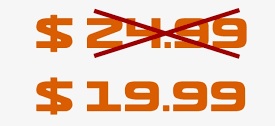
The general meaning of bias is prejudice or favoritism. Statistically, bias means the distortion of results. One of the methods to wade through in life would be to control our biases. How does that happen? Life is the end product of multiple decisions we take every minute and every day. Our biases influence our decisions. Financial decisions and purchasing decisions are not exceptions to this.There are two types of behavioural biases.
- Cognitive errors
- Emotional bias
A single behavioral bias may have both of these components, with one of them generally dominating. Examples of cognitive error (bias) are anchoring, mental accounting, and framing. Loss aversion and the status quo fall under the category of emotional bias. Once we learn to identify and manage our culprit biases in decision-making, outcomes get better.
Anchoring : It's a common experience for all of us to come across a salesperson quoting INR 600 for a T-shirt. With this, she would have planted an ‘anchor’ price in the buyer before the actual negotiation begins. The final transaction may happen at the negotiated price of INR 500, which would have been the target price of the seller. Recently, I was speaking to a friend about filing tax returns. She said initially CA asked her to pay an additional 3 lakhs as tax, but after the review of the data, the exact amount was found to be 1 lakh. She was relieved that the amount was much smaller than the initial indicated ‘anchor’ figure. The buyer would be happier once the negotiated price was less than the anchor price. Similar experience we may have in stock acquisition as well. If some have bought Reliance shares at INR 2000, they may not buy the stock at INR 2030, despite its good valuation. Heard of the adage, 'First impression is the best impression?’ It's closely related to anchoring bias and may hit the wallet.
How can we manage this bias? Avoid impulsive buying. Instead, buy more time to study the product! Tracking the price may also help us make a more thoughtful decision about buying.
Loss aversion is a tendency to perceive the impact of loss more than that of gain in a similar measure. This may lead to a situation where a potential opportunity to gain may be rejected for fear of loss. Despite the high potential for price appreciation of a stock, one may not buy the stock. This is due to loss aversion bias, though the chance of loss is less compared to the probability of gain. This bias has a neurochemical, socioeconomic (individual and societal), and cultural basis. This bias may be tackled by focusing more on the gains and recognizing the worst-case scenario in advance.